
AI hairstyle changer: see it before you commit
An AI hairstyle changer does not cut hair and it cannot guarantee a result — it answers one question before you sit in the chair. Covers the four axes of any hairstyle, the three places a conversion stops looking real, and trying five options without the face drifting.
On this page
An AI hairstyle changer answers one narrow question: what would this cut look like on this head. It does not cut hair, it cannot predict how your hair behaves after a wash, and it will not tell you whether a stylist can execute the reference. What it can do is remove the worst outcome of a bad decision — three years of growth gone in forty minutes of optimism.
Everything below follows from that framing. The photograph is the source of truth, the description is the instruction, and the only thing worth optimising is whether the face still reads as yours.
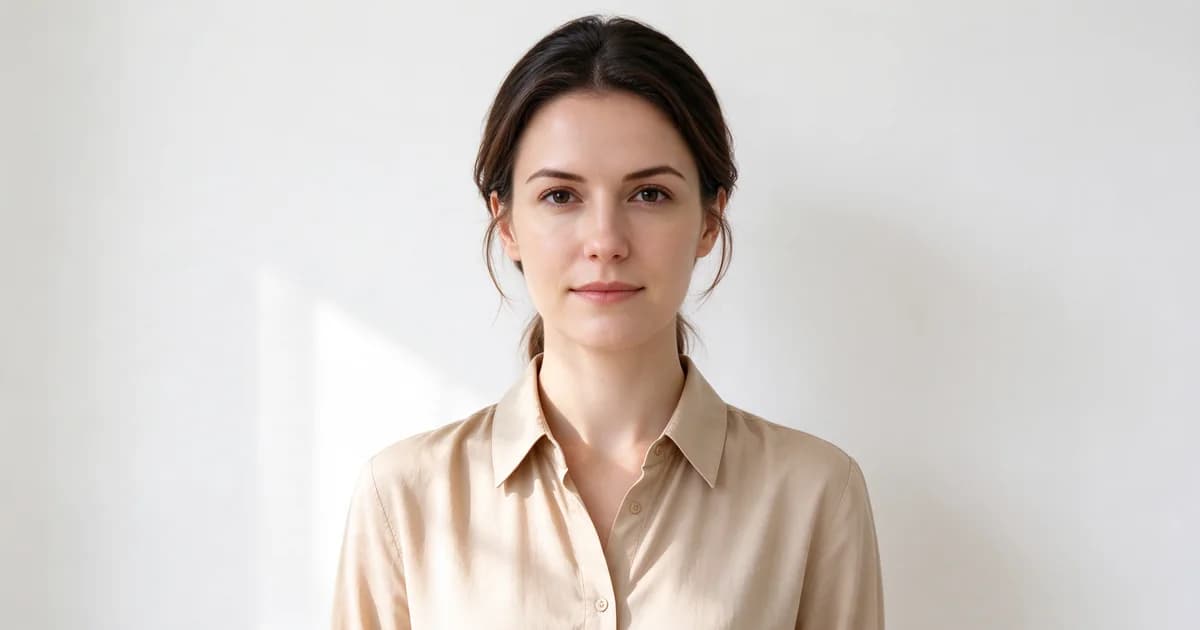
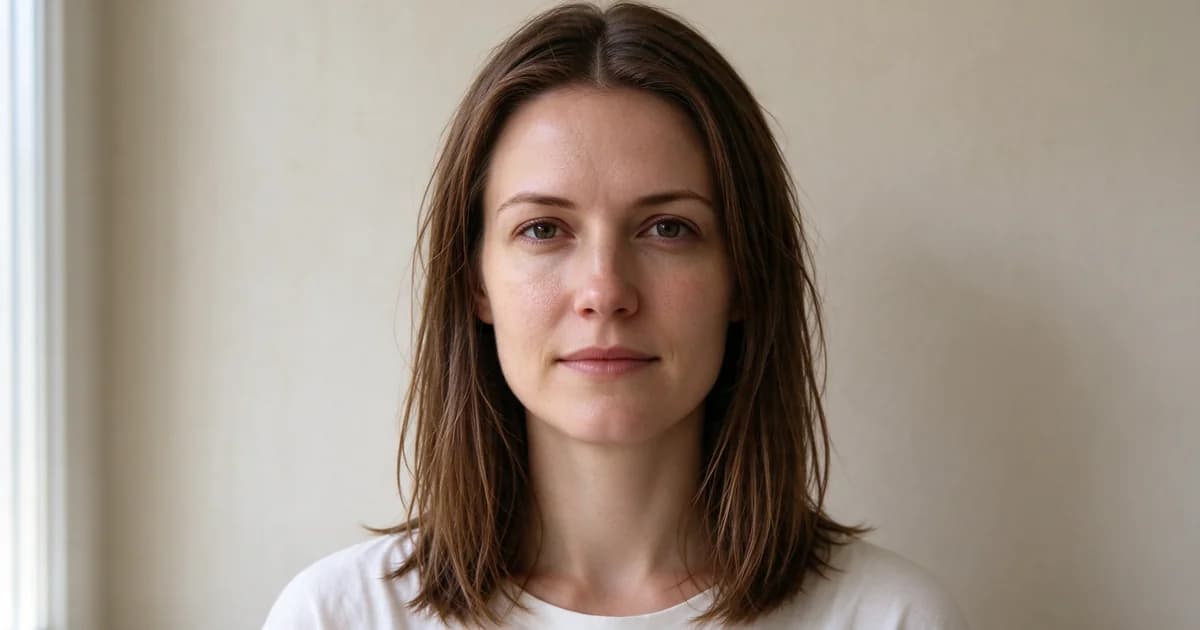
Five conditions the source photo has to meet
Hair conversion fails at the input more often than at the prompt. Each of these is a hard requirement, not a preference.
Facing the camera, head straight. A face turned even slightly forces the model to guess the far jawline, and a guessed jawline produces a different person. Slight angles are tolerable; anything past fifteen degrees is not.
The forehead visible. A fringe covering the forehead means the model has not been shown the hairline at all. Without it, the new hairstyle has no origin point and grows out of the middle of the forehead.
Even light across the face. Half a face in shadow gets read as facial structure, and the shadow survives the conversion — so the face looks unchanged while the hair has clearly been swapped, and the whole picture stops cohering.
Ears visible. Ear position determines the proportion of the head. Covered ears mean the model cannot compute head width against face width, and short or pulled-up styles come out with a visibly wrong skull.
A background that does not clash with the hair. Dark hair against a dark background dissolves at the edges, which is most obvious when the target style is lighter or has highlights. A plain wall solves it.
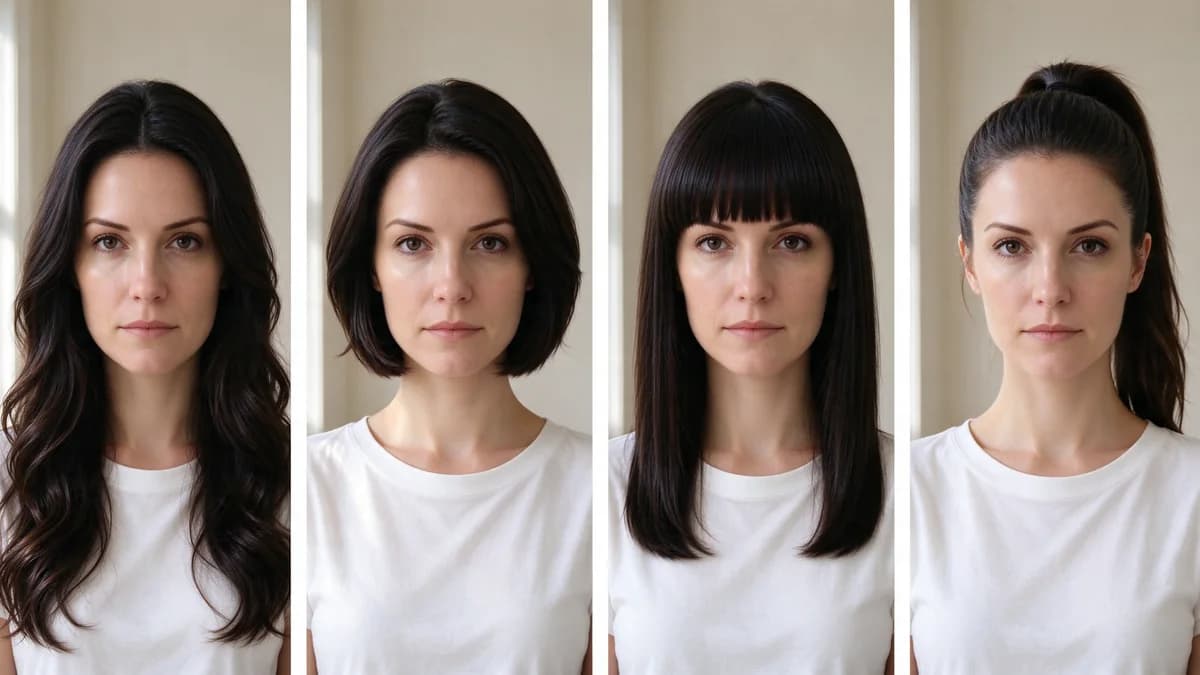
Four axes define any hairstyle
"Something fresher" is not a description, it is a wish. Break the request into four independent axes and every hairstyle becomes specifiable.
Length. Give a position, not a feeling. Three centimetres below the ear, on the shoulder, at the collarbone, at the chest. Position determines how much of the face is left bare: below the ear exposes the jawline entirely, collarbone pulls the visual weight down, chest length makes the face read smaller.
Texture. Straight, large waves, woolly curls, inward curl. Texture changes the perceived width of the face — waves push outward, curls stack volume upward, an inward curl pulls the eye back to the chin.
Fringe. None, sheer, blunt, curtain. The fringe decides how much forehead is visible, and visible forehead changes the face's length-to-width ratio more than any other single choice.
Colour. Natural black, cool brown, ash, highlights. Colour changes how the skin reads, not the shape. If you want highlights, name where: highlights only in the last three centimetres — otherwise the whole head gets layered.
Why the result looks pasted on
Three mismatches, and none of them is about style accuracy.
The hairline. A new hairstyle has to start where the original hairline is. When the description says "short bob" without saying "keep the hairline", the model places the new edge wherever it likes, and the hair appears to float on the forehead rather than grow from it.
The direction of the hair. If the original parts on the left and the new style parts on the right, the strands near the crown reverse direction while the outer silhouette stays put. It reads as two different photographs stacked.
The light direction. Light on the face comes from one side; if the hair highlight lands on the opposite side, skin and hair are lit by different sources, which is the single most reliable tell that the image was assembled rather than photographed.
Each has a one-sentence fix, and all three belong in the same block: keep the hairline as in the photo, keep the parting on the left, light from the left with the hair highlight on the left side.
Trying five options without the face drifting
The point of a hairstyle changer is comparison, and comparison only works if the face is constant.
Write the keep clause into every description, not just the first: keep the face shape, the proportions of the features, and the skin tone. Three sentences that look redundant, and without them the face drifts toward an average by the third or fourth attempt — subtly at first, then obviously.
Change one axis at a time. Changing the cut, the colour and the background together means four variables and no way to attribute a bad result. Get the length settled, then add texture, then colour.
Use the same source photograph for the entire comparison. A different photo is a different starting point, and two results from different sources cannot be compared meaningfully even if both look good on their own.
Matching a style to a face
| Face shape | Direction that tends to work | What to emphasise in the description |
|---|---|---|
| Round | Length below the jaw, volume at the crown | length at the collarbone, height on top, no width at the cheeks |
| Square | Soft waves, side parting | waves starting below the ear, soft edges, avoid a blunt straight line at the jaw |
| Long | Fringe, width at the sides | sheer fringe covering the forehead, volume at ear level |
| Oval | Most directions work; avoid excess volume | keep the proportions, highlight placement matters more than cut |
| Heart | Chin-length, weight at the bottom | length at the jaw, volume low, no volume at the temples |
| Diamond | Fringe and width at the jaw | side-swept fringe, width below the cheekbones, avoid height at the crown |
The table is a starting point, not a rule. A stylist reads bone structure, hair density and growth pattern; a conversion only sees a photograph. Treat the comparison as a way to eliminate options rather than to pick one.
Two faces, one style, different results
The reason a style that looks great on someone else fails on you is rarely the style. Five variables travel with every photograph, and four of them are invisible unless you look for them.
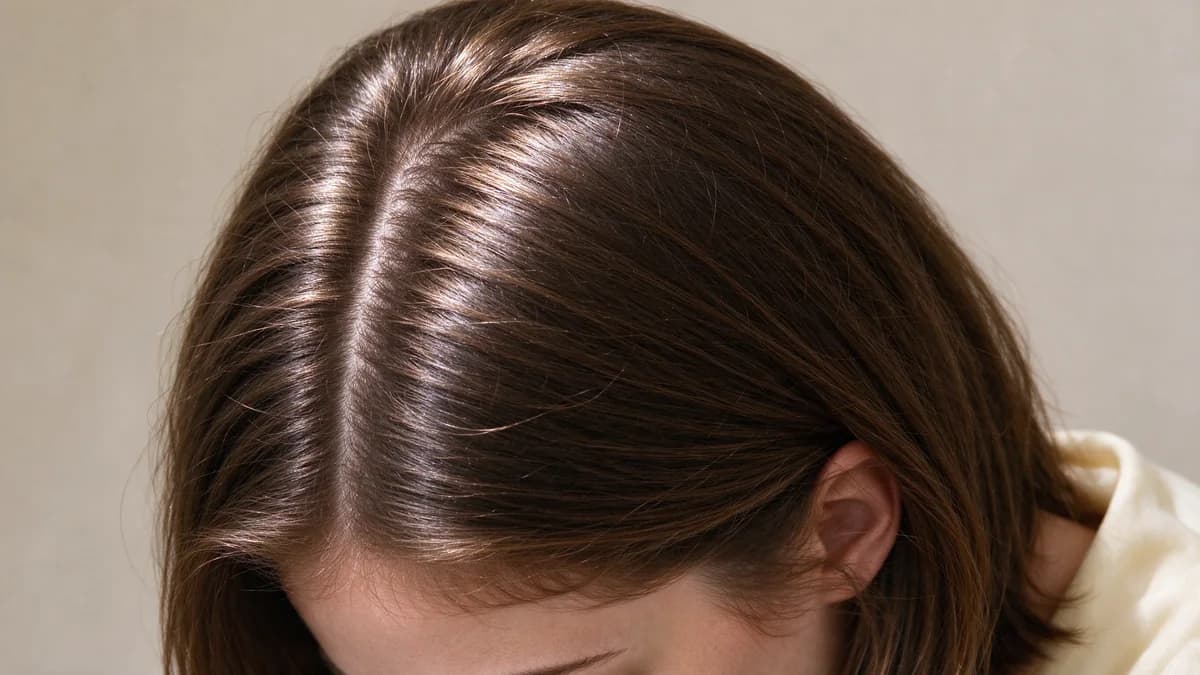
Hair density. Thin hair falls flat and shows scalp at the parting; thick hair holds volume and reads wider. A conversion will render the style at the density it reads from your photo, which is honest, and which is why a copy of a bob from someone with twice your density will look nothing like the reference.
Growth pattern and cowlicks. A parting that sits naturally on one head fights the hair on another. If your hair falls forward and the reference falls back, the conversion will show the style, not the behaviour — and the behaviour is what you live with every morning.
Hairline height. A high hairline suits a fringe; a low hairline with a heavy fringe eats the forehead and shortens the face. This is the single variable most people ignore when copying a reference.
Neck length. Chin-length cuts read differently depending on how much neck is visible. A crop that looks elegant on a long neck can look boxy on a shorter one.
Face width against jaw shape. Two people can both have an oval face and still need different volume placement, because the widest point sits at a different height.
None of this makes comparison useless. It makes it more specific: when you look at a reference, ask which of the five conditions you share and which you do not. The ones you do not share are the ones the conversion cannot tell you about.
The order to work in
- Choose the photo against the five conditions, not against how flattering it is.
- Change one axis only — length. Nothing else.
- Check the face. Outline, hairline, spacing of the eyes. If any moved, the keep clause is too weak.
- Add the second axis, then the third, checking each time.
- Save every version at the same size so the comparison is honest.
- Look at the result at arm's length, the way you would look at someone across a table, not at full screen.
What this is not
It is not a haircut, and it is not a preview of the haircut. Hair behaves differently when it is dry, when it is not styled, and three weeks after the cut. A conversion shows the shape; it cannot show how the shape will sit on a Tuesday morning.
It is not drawing from scratch, either. Without a source photograph there is nothing to preserve and the output is a generic portrait with a generic head of hair.
And it cannot tell you whether the style suits you. It can show you a plausible version of it, which is enough to rule things out — and ruling things out is most of what this is for.
If the photo needs repair rather than a hairstyle, photo retouching covers restoration and background work. If you would rather start from a description than a photograph, templates is the other direction. The editing tool itself is at image to image.